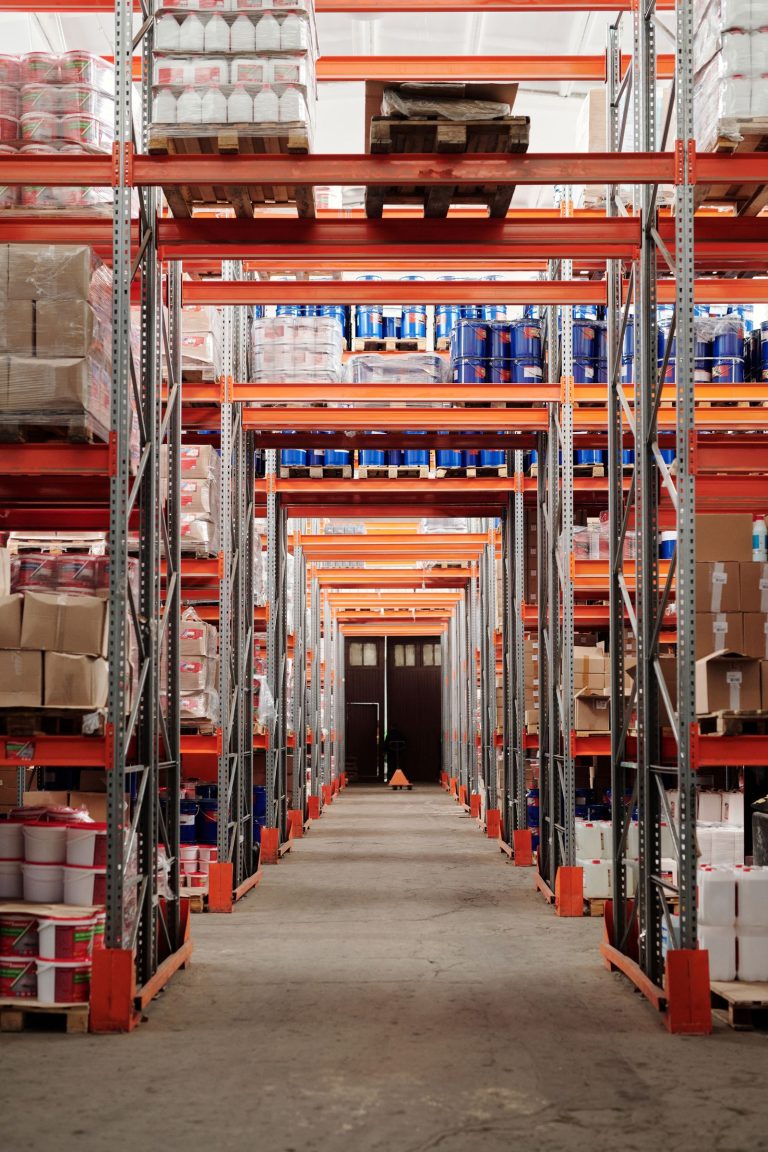
Smart warehouses are becoming an unavoidable investment trend as logistics costs in major markets like the US have reached trillions of dollars annually, accounting for nearly 9% of GDP — a figure that shows the pressure to optimize warehouse operations has never been greater. Against this backdrop, this automation model — featuring systems such as two-deep and four-deep Pallet Shuttles, Automated Storage and Retrieval Systems (AS/RS), and Warehouse Management Software (WMS) — is seeing heavy investment from warehousing solution providers, even as they expand into demanding markets like North America.
What Problem Do Smart Warehouses Solve?
Unlike traditional warehouses that rely heavily on manual labor, smart warehouses optimize three factors: storage density (fitting more inventory into the same floor area), order processing speed (reducing inbound-outbound turnaround time), and real-time inventory data accuracy. These factors matter more than ever as e-commerce and omnichannel supply chains demand faster delivery speeds and lower error rates.
According to Wikipedia’s entry on Automated Storage and Retrieval Systems (AS/RS), this technology dates back to the 1960s and has become increasingly widespread as sensor and robotics costs have fallen sharply — making this model accessible to small and medium businesses, not just large corporations.
Where Does Vietnam Stand in the Smart Warehouse Trend?
Vietnam’s warehousing industry still has substantial room for digital transformation. Most small and medium warehouses still operate manually or semi-automatically. However, as import-export businesses demand ever-stricter standards for order processing speed and inventory accuracy, Warehouse & Distribution service providers are being forced to invest in system upgrades to retain customers.
Benefits for Businesses That Choose a Smart Warehouse Partner
- Reduced order processing time, shortening delivery time to end customers.
- Accurate real-time inventory control, limiting stock loss.
- Easy scalability during sudden seasonal demand spikes.
- Less reliance on seasonal labor, stabilizing long-term operating costs.
Through its Warehouse & Distribution services, Connect Global partners with businesses to select suitable automation solutions suited to their scale and industry, helping optimize operating costs without needing to invest in their own warehouse infrastructure. This is also a critical foundation for properly handling the rapidly growing volume of heavy and oversized cargo orders. Contact our consulting team for a free warehousing needs assessment.
What International Businesses Should Ask About Smart Warehouse Partners in Vietnam
Foreign brands expanding distribution into Vietnam should confirm whether a warehousing partner’s systems support real-time inventory visibility through an API or client dashboard, not just internal reporting. This distinction matters for multinational companies that need to sync stock data with regional or global ERP systems.
It’s also worth asking how quickly a facility can scale storage capacity during peak seasons such as Lunar New Year or major e-commerce sales events, since this flexibility is one of the clearest benefits automated systems offer over manually run warehouses.
Frequently Asked Questions About Smart Warehouses
What technology defines a smart warehouse? Automated Storage and Retrieval Systems (AS/RS), Pallet Shuttles, and Warehouse Management Software (WMS) are the core technologies that distinguish this model from traditional manual warehousing.
Is this automation model only useful for large companies? No — falling sensor and robotics costs have made these systems increasingly accessible to small and medium businesses, not just large corporations.
Does Connect Global operate its own smart warehouse facilities? Connect Global partners with warehousing providers offering suitable automation solutions for each client’s scale and industry, without requiring businesses to invest in their own infrastructure.
How is automation ROI typically measured? Most operators track payback period against labor savings, reduced error rates, and faster order processing, with many mid-sized facilities recovering their automation investment within three to five years.