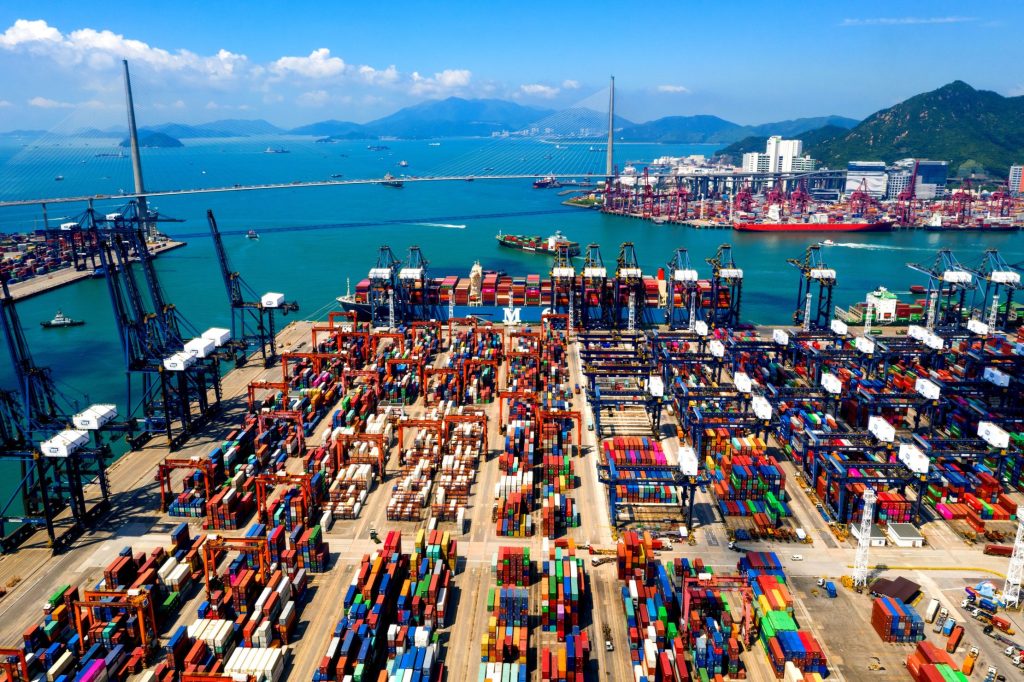
Hong Kong container yard fire broke out in a container storage yard in Yau Ma Tei, Hong Kong, on October 14, resulting in significant damage to over 10 containers. The blaze, believed to have originated from plastic materials, took 14 hours to extinguish.
Firefighters faced challenges due to the nature of the materials involved and the confined space of the container yard. They utilized drones to assess the situation, deployed multiple street wells for water supply, and even mobilized fire boats to pump seawater directly onto the fire. Heavy fire-fighting equipment was necessary to move the burning containers and extinguish any remaining sparks.

The fire eventually spread to a nearby barge, increasing the scale of the incident. Authorities raised the fire alarm to Level 3, indicating a major emergency, and dispatched additional resources to contain the flames.
Despite the significant damage caused, no injuries were reported. The fire department urged nearby residents to take precautions by closing their doors and windows due to the smoke and flames.
Why the Hong Kong Container Yard Fire Matters for Supply Chain Security
Incidents like the Hong Kong container yard fire are a reminder that cargo storage facilities carry real fire risk, especially when plastics, packaging materials, and mixed cargo are stored at high density. A single ignition source in a confined container yard can escalate quickly, as shown by the 14-hour effort required to bring this fire under control and the way it spread to a nearby barge.
For logistics operators and shippers, this type of event highlights why fire-risk assessment, cargo segregation, and facility security should be part of any serious supply chain security program. Certifications such as TAPA supply chain security standards increasingly require warehouses and container yards to document fire-prevention measures, not just theft-prevention controls, because the financial impact of a fire can be just as severe as cargo theft. International guidance, such as the fire safety codes published by the National Fire Protection Association (NFPA), is also increasingly referenced by Asian ports and logistics parks when they design container storage layouts and firefighting access routes.
Operationally, a container yard fire of this scale also disrupts cargo availability, delays vessel loading, and can trigger insurance claims that take months to settle. Businesses that rely on tight delivery windows should factor in contingency routing and buffer stock for shipments passing through high-density port areas, particularly during peak season when yards are most congested.
For Vietnamese importers and exporters, the Hong Kong container yard fire is also a useful case study when choosing transshipment routes through Hong Kong or nearby regional hubs. Working with a freight forwarder that tracks yard congestion, insurance coverage, and fire-safety compliance at transit ports can reduce the risk of cargo delays if a similar incident occurs. Connect Global’s operations team monitors these regional risk factors as part of standard route planning for sea and air freight shipments, so that customers are notified early if a port or yard disruption could affect transit time.
——
With the motto “Global Standard – Local Insight”, Connect Global is continuously innovating to become a professional Vietnamese logistics brand, standardizing according to international standards and possessing deep insights into the Vietnamese logistics market.
The comprehensive services provided by Connect Global include:
- Sea Freight / Air Freight / Road Freight Transportation
- Warehousing & Distribution
- Customs Clearance Services
- Supply Chain Optimization
- Cross-border Transportation
- Additional Services: Cargo Insurance, Customs Procedures,…
Frequently Asked Questions About the Hong Kong Container Yard Fire
Did the Hong Kong container yard fire affect shipping schedules? Fires of this scale typically disrupt cargo availability and delay vessel loading at the affected yard, which can ripple into transshipment schedules for cargo routed through nearby regional hubs.
What can shippers learn from the Hong Kong container yard fire? The incident is a reminder that fire-risk assessment and facility certification matter as much as price when selecting a transshipment port or container yard.
Does Connect Global monitor incidents like the Hong Kong container yard fire? Yes — Connect Global’s operations team tracks yard congestion, fire-safety compliance, and disruption risk at key transit ports so customers are notified early if a similar event could affect their shipment.