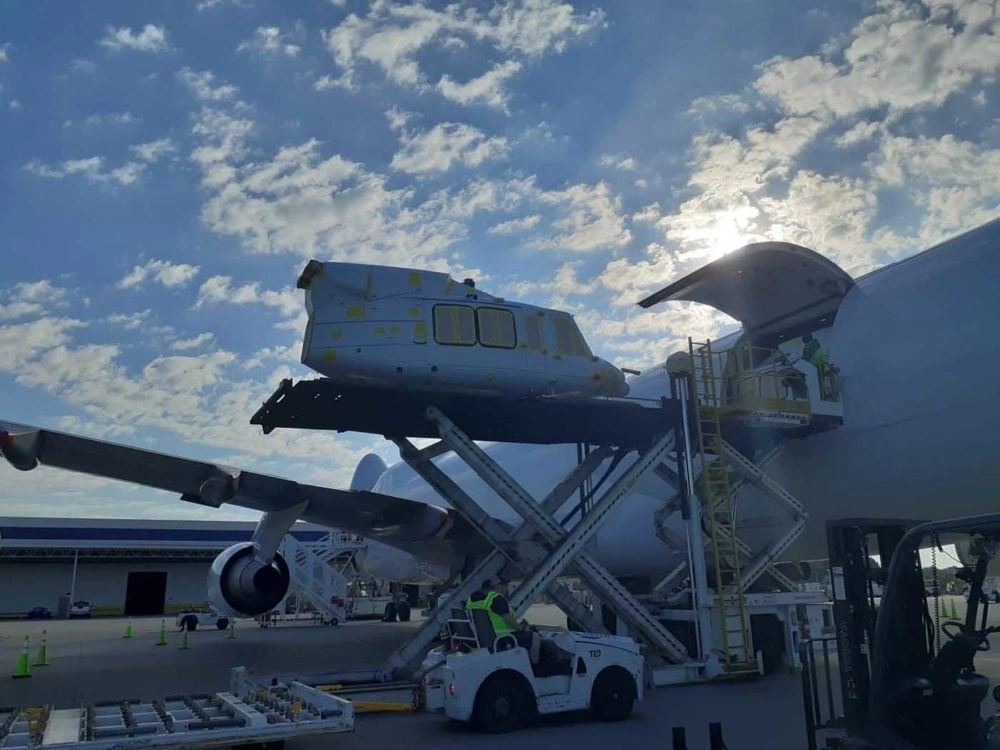
Transporting helicopters and aviation components across international borders has grown increasingly complex. Companies must navigate strict documentation, technical standards, and regulatory requirements—while partnering closely with specialized logistics providers. This article breaks down the major challenges, real case studies, and best practices shared by industry leaders at the Vertical MRO Conference in Kelowna, Canada.
1. Why Cross-Border Helicopter Transport Is Increasingly Complicated
Experts at the conference emphasized that moving helicopters or their components internationally is one of the most challenging aspects of the maintenance and operational cycle. What may appear to be a simple shipment can escalate into a costly issue if procedures are not followed precisely—especially those related to packaging, documentation, and customs clearance.
According to Don Lockie, founder of Aviation Resources Group (ARG), and John Ross from Eagle Copters, international logistics must be seen not as a basic transportation step, but as a direct extension of the maintenance process itself.
2. Beyond Transportation: Understanding Cross-Border Requirements
International aviation transport involves far more than moving cargo from point A to point B. Logistics teams must:
-
Understand the import/export regulations of each country
-
Coordinate with freight forwarders and customs brokers
-
Manage industry-specific technical requirements
-
Prevent errors in declarations and documentation
Even minor mistakes—such as incorrect paperwork—can lead to shipment holds, thousands of dollars in extra costs, or disruptions to aircraft operations.
Lockie, who previously led Redfort Group Aviation Logistics and oversaw thousands of aircraft and AOG shipments, highlighted the importance of expertise. Poor decisions in logistics, he noted, can be as damaging as errors in aircraft maintenance.
3. Real-World Case Studies: When Logistics Gets Complicated
Emergency extraction of aircraft from a politically unstable country
Lockie recounted a mission involving multiple aircraft valued at over USD 60 million that had to be evacuated within just four days. The operation required real-time coordination between operators, local authorities, and chartered aircraft—a clear example of how time-sensitive and high-risk aviation logistics can be.
A Caribbean–Africa move that required a full transport switch
Ross described another situation where a helicopter shipment initially planned via sea freight became unfeasible due to unexpected port schedule changes. The logistics team had to reroute the cargo through Europe and convert the shipment to air freight. Although the change sounded simple, it required nearly a month of readjustments and resulted in significant additional costs.
4. Rising Challenges: Regulatory Shifts, Security Measures & Customs Barriers
Over recent years, aviation logistics has faced increased complexity due to:
-
Changing trade regulations
-
Stricter security requirements
-
Customs systems not designed for oversized or sensitive aircraft components
These factors make it essential for companies to work with logistics specialists capable of anticipating risks and preparing contingency plans.
5. Balancing Cost and Transit Time in Aviation Logistics
Specialized air transport is often more expensive than standard freight services. However, industry experts stress that the investment is justified. Traditional carriers are not equipped to handle:
-
Oversized or fragile aircraft components
-
Hazardous materials
-
Urgent AOG shipments
A single delay can ground an aircraft, costing operators tens of thousands of dollars per day.
Thorough planning—including routing, packaging standards, documentation accuracy, and total cost evaluation—is critical to minimize risk.
Ross emphasized the need to weigh urgency against financial capacity:
“Everyone wants faster delivery, but is paying three times more worth it? It depends on how urgent the operation is.”
6. Common Pitfalls: Packaging Standards, Dangerous Goods & Declaration Errors
Some of the most frequent issues include:
-
Using untreated wooden crates without phytosanitary certification
-
Incorrect or incomplete declarations
-
Improper handling of dangerous goods such as lithium-ion batteries
-
Missing confirmation that fuel has been drained from the aircraft
Any of these can result in cargo rejection, legal penalties, or lengthy investigations.
Recent changes in U.S. de minimis thresholds have also caused congestion, forcing low-value shipments to undergo detailed declarations. This further increases pressure on customs clearance points, making the role of experienced customs brokers more crucial.
7. Logistics as a Critical Link in Aviation Safety
Every component moving through the maintenance cycle contributes directly to aviation safety. Logistics errors—whether administrative or technical—can create consequences as serious as mechanical failures.
Industry leaders recommend that maintenance organizations:
-
Integrate logistics planning early in the maintenance process
-
Select partners with proven aviation logistics expertise
-
Maintain up-to-date dangerous goods (DG) training
-
Involve customs specialists from the beginning
Cutting costs by overlooking compliance may save money short term, but often results in far greater losses when shipments are delayed or denied clearance.
Cross-border helicopter transport demands specialized knowledge, meticulous planning, and strict adherence to global aviation standards. As regulations tighten and supply chains grow more complex, businesses that invest in professional aviation logistics will gain a significant operational advantage—ensuring safety, minimizing downtime, and maintaining the performance of their fleet.